The approach
A fortress the size of a hill
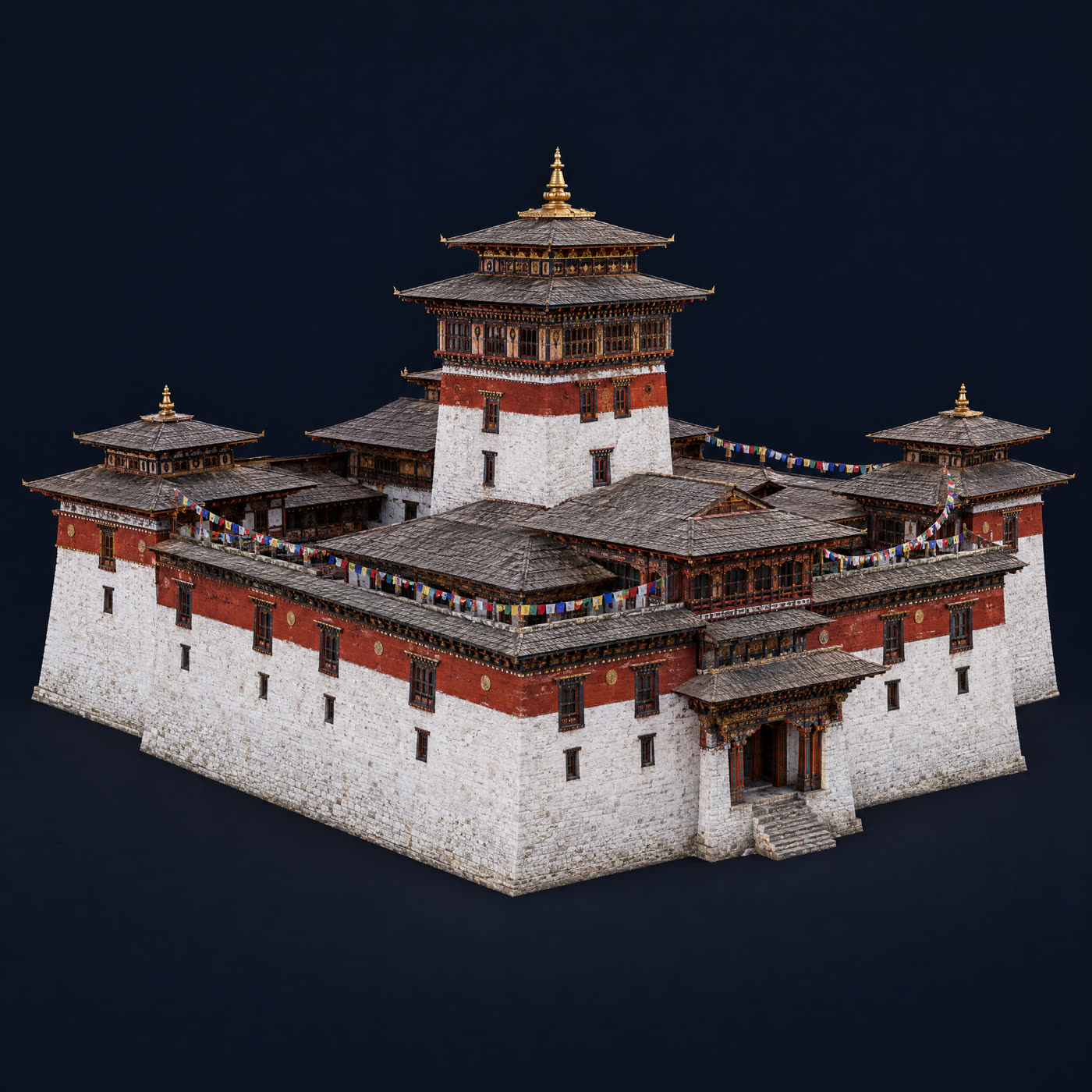
Punakha Dzong holds the meeting of two rivers, raised in 1637 to be seen from the valley floor long before it is reached.
Dzong Atlas
A real-time model of a Bhutanese dzong. Drag to orbit it, or leave it turning on its own.
Drag to orbit. Pinch to zoom.
The approach
Punakha Dzong holds the meeting of two rivers, raised in 1637 to be seen from the valley floor long before it is reached.
The threshold
A cantilever bridge carries the only way in. Past it, the gate is a door of painted timber, wide enough for a procession.
The inner ground
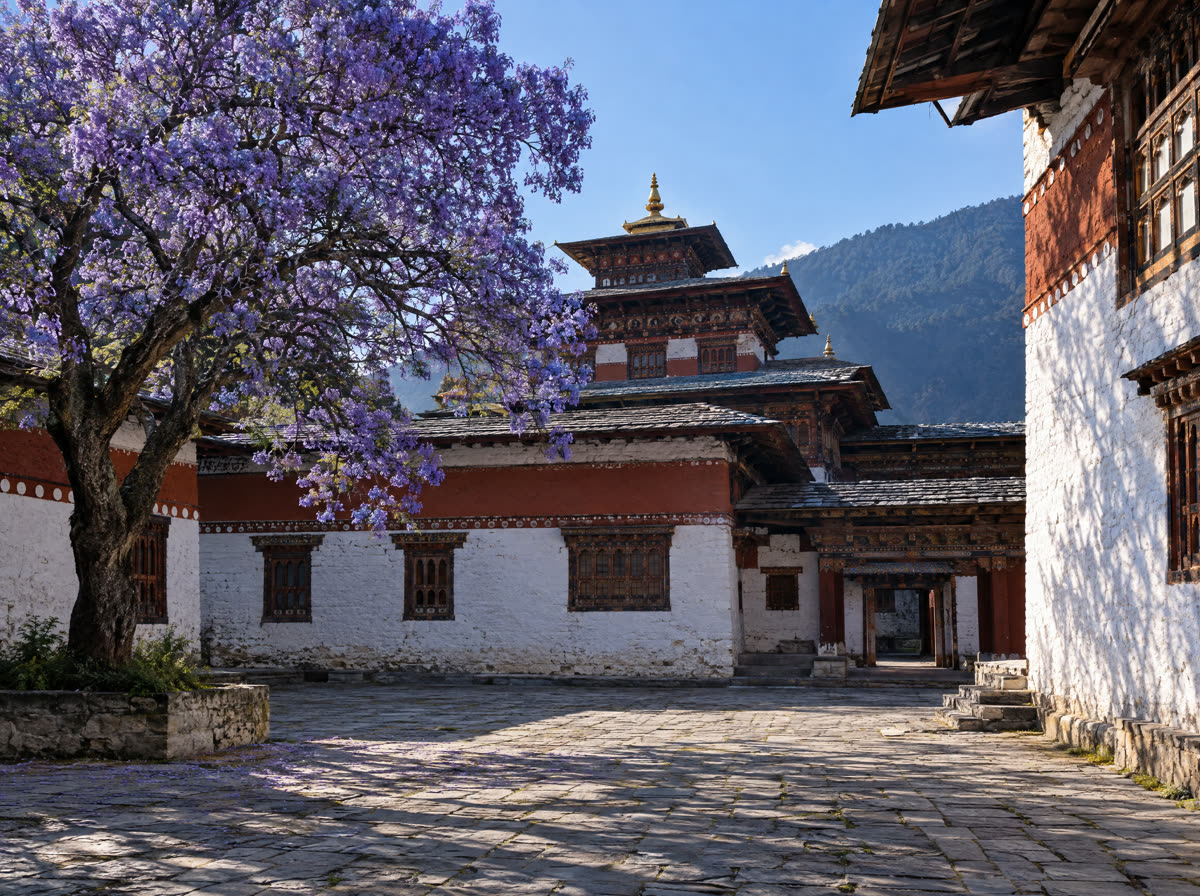
Limewash to the height of a man, then a single band of cinnabar. In the courtyard a jacaranda turns violet every spring.
The tower
The utse rises from the middle of the courtyard. Its walls are thickest at the base, and the finial at the top is gilt.
The setting
From above the reason for the site is plain. The dzong holds the fork of the Pho Chhu and the Mo Chhu, as it has since it was the seat of government.
A building read in section
A dzong is not one building but a walled town: an outer wall, a courtyard, a temple tower, and the quarters of the monks who keep it. Four centuries of use have left the plan almost unchanged.
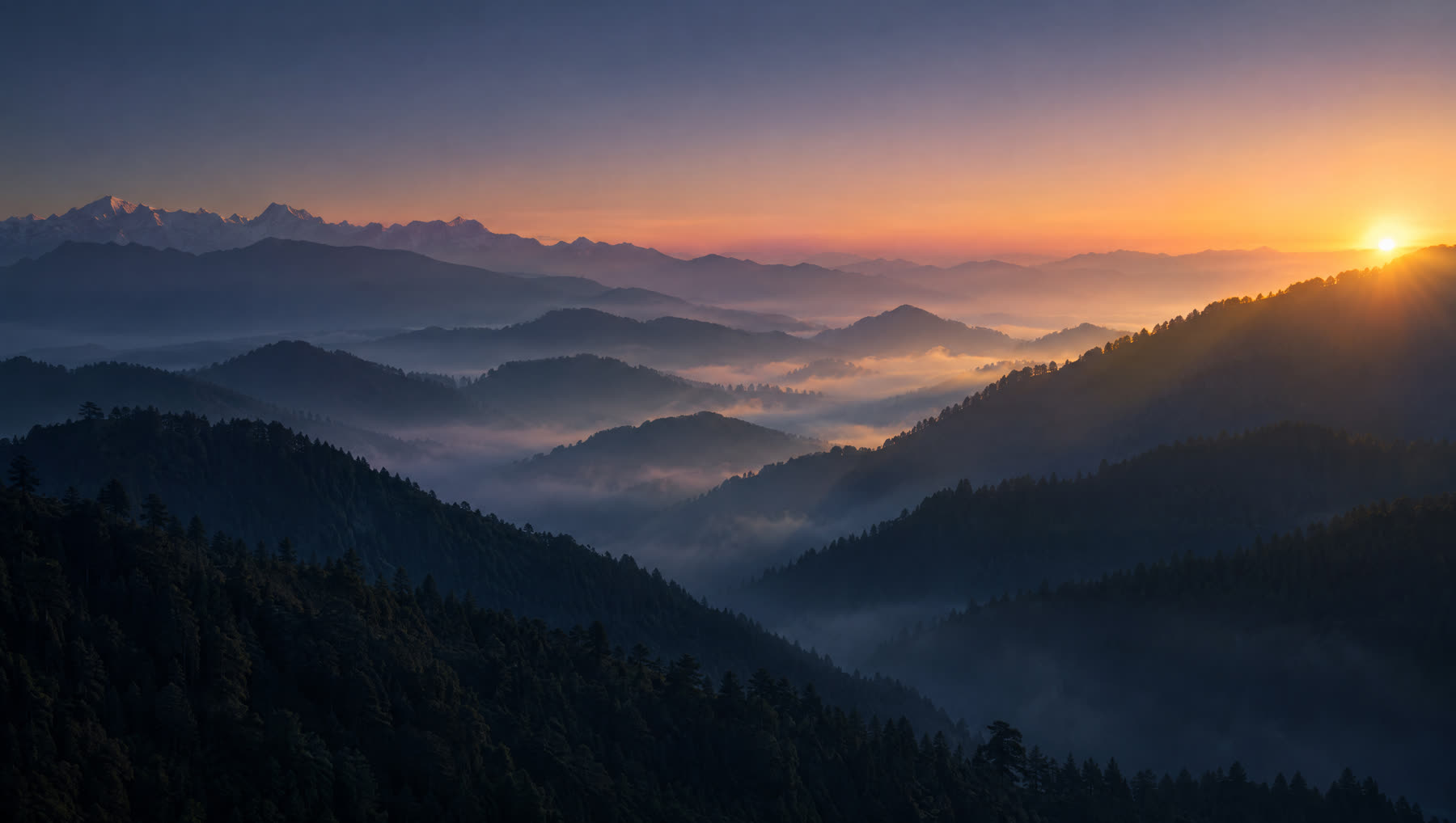
The site chose the building.
A defensive ridge above two rivers, with a gorge on the approach and the only crossing for a day in either direction.
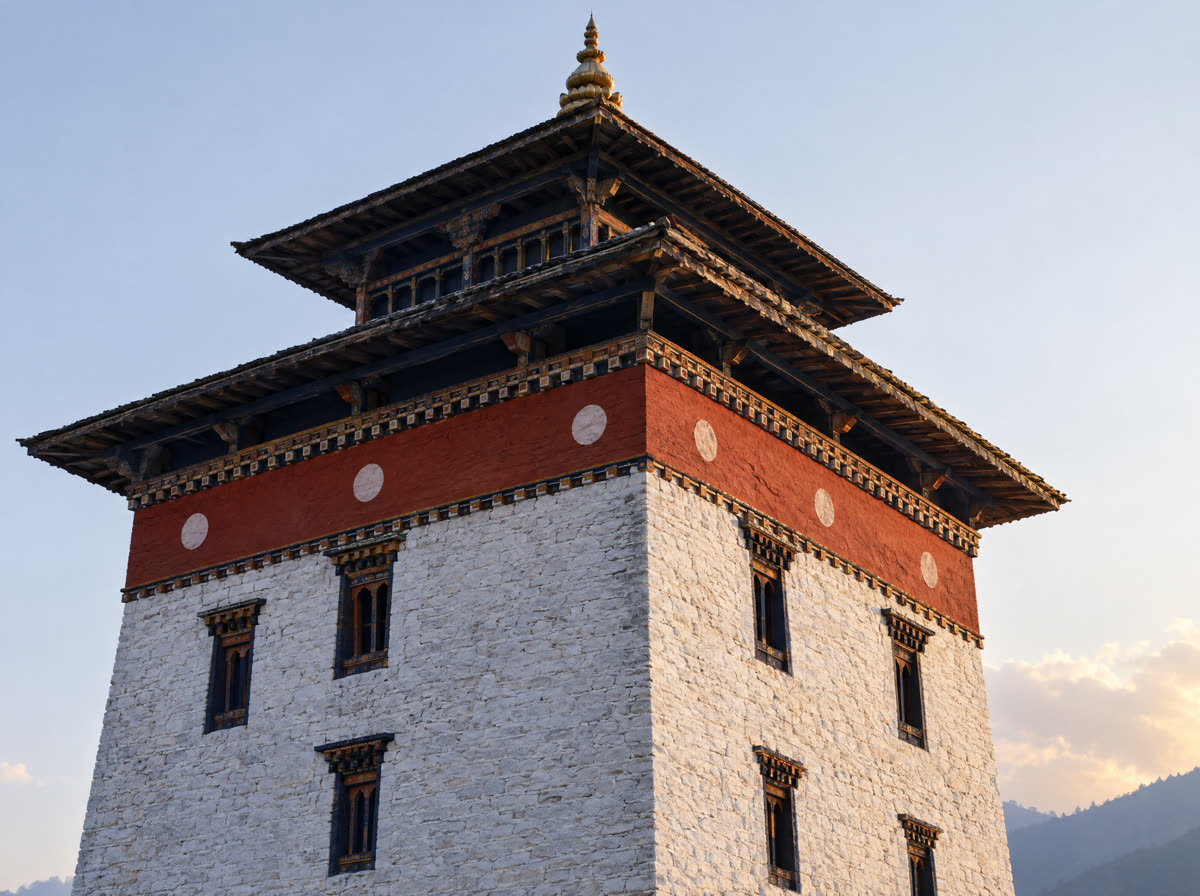
01
The tallest structure inside the walls, and the last one reached on foot.
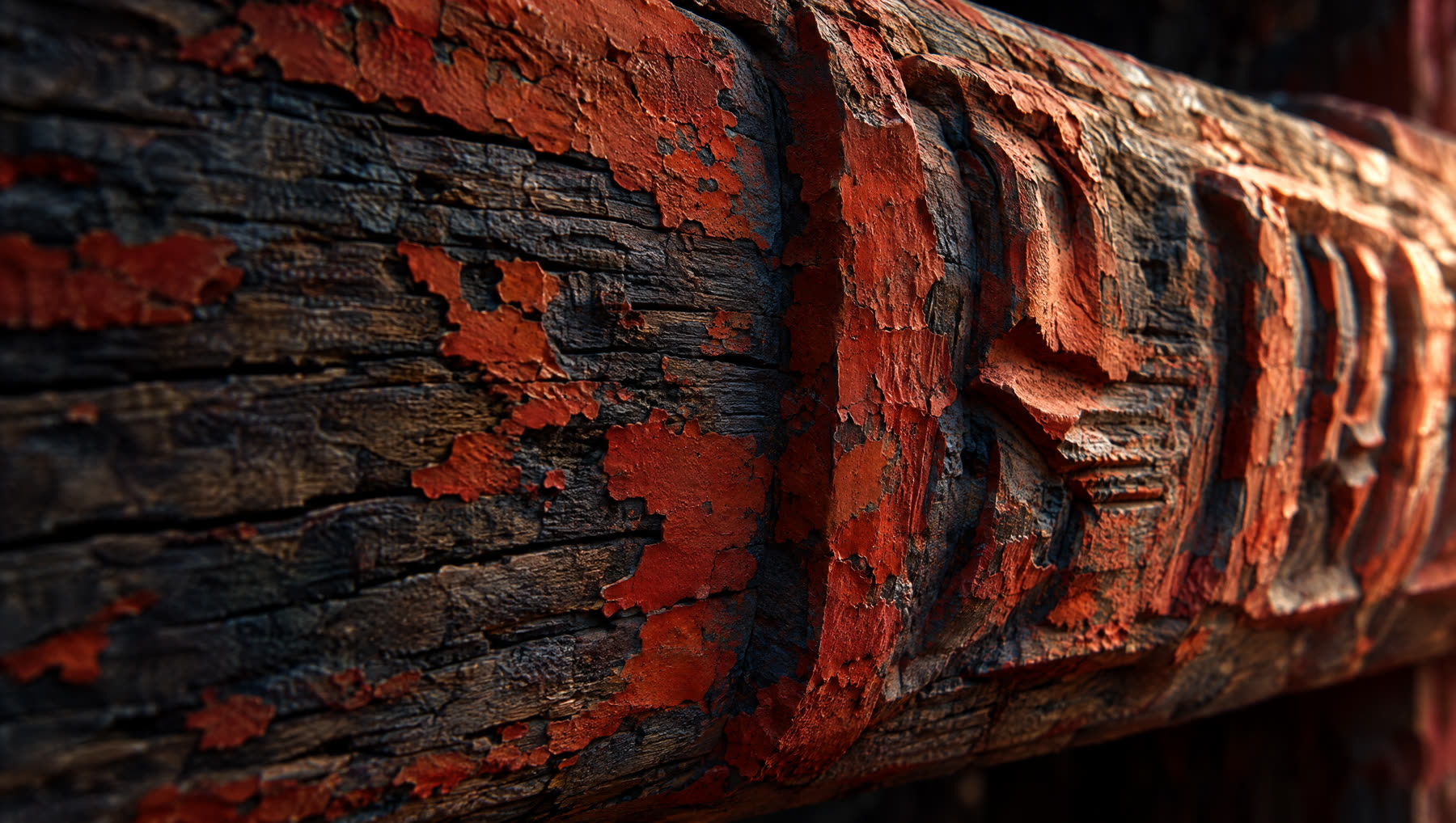
02
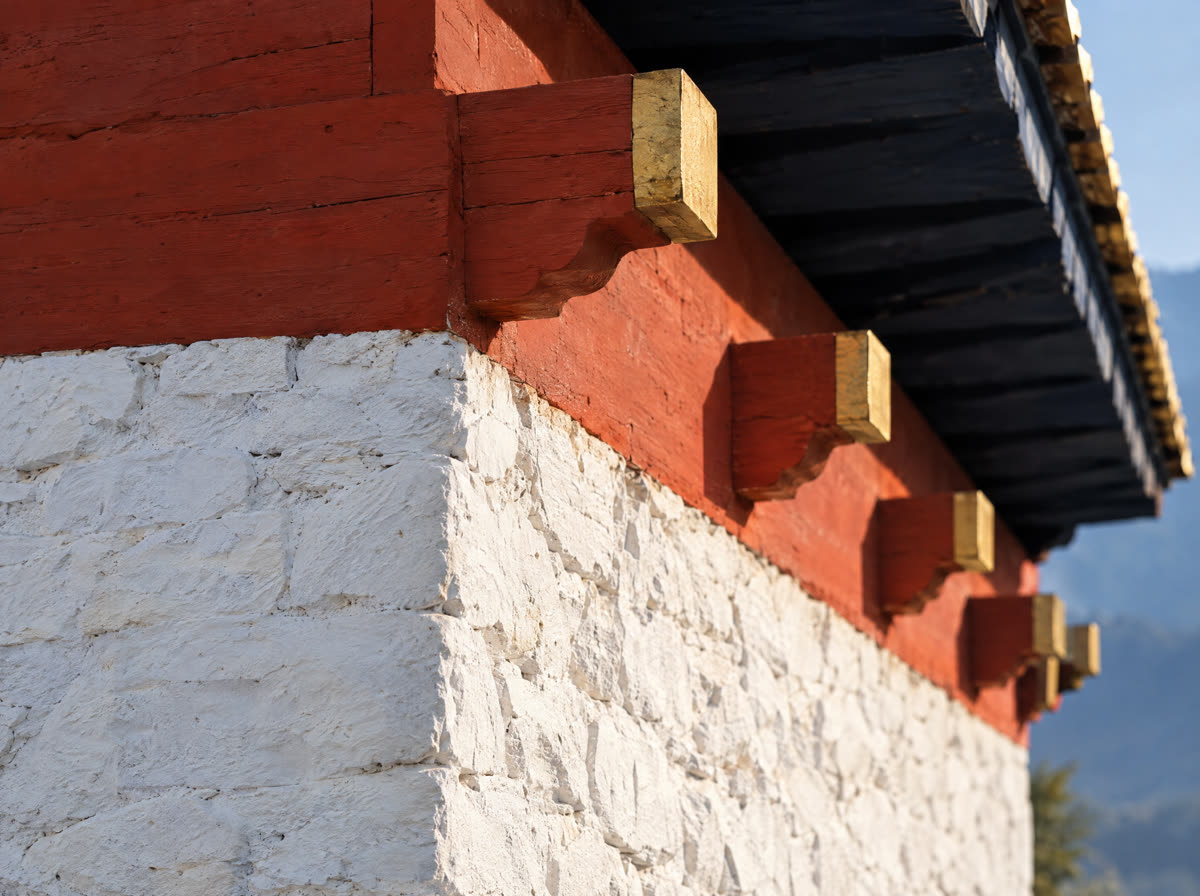
One painted course of timber runs the whole outer wall, above head height.
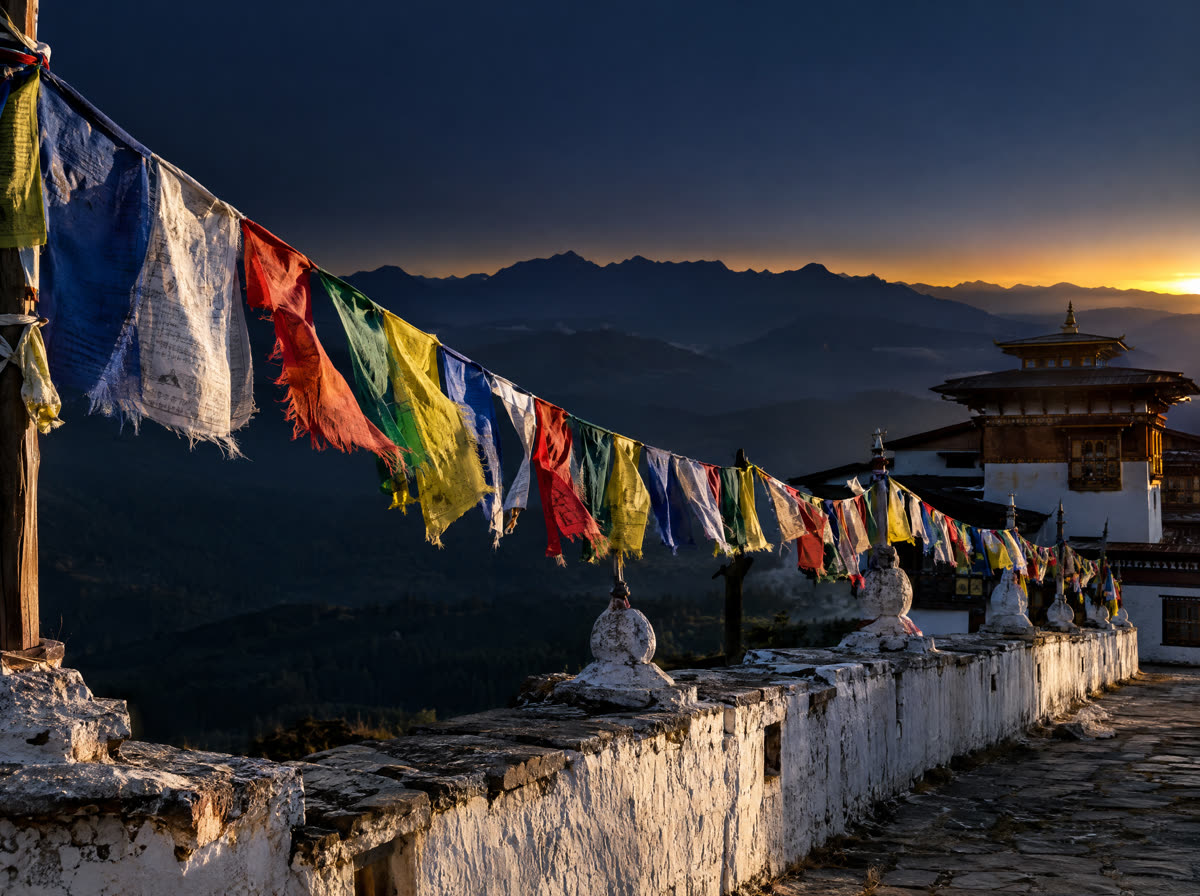
03
Strung from the parapets and left to the wind.
04
Stone paving, limewashed walls, and a jacaranda that flowers violet in spring.
Five stops from the water to the ridge, in the order the film takes them.
01
The river floor
Where the two rivers meet, and the road turns upward.
02
The bridge
A cantilever of timber, which has been rebuilt more than once in the same place.
03
The gate
Painted timber, wide enough for a procession and low enough to bow under.
04
The utse
The tower at the centre of the courtyard, thickest at its base.
05
The ridge
The walls from above, with the valley opening on both sides.
A dzong holds a fortress, a monastery and an administration inside one wall.
Bhutan's dzongs were raised as the seat of both spiritual and civil authority. The wall came first, because the wall is what made the rest possible: the temple, the granary, the quarters, the courtyard where the whole district could gather.
Punakha kept the government longest. The capital moved to Thimphu in 1955, and the monastic body has wintered inside these walls ever since. The building is not a monument to be looked at. It is a working house of prayer that happens to be extremely old.
This is an active monastic site, not a ruin. Dress modestly, keep to the marked route, and follow the directions of the monks you meet.
Spring is the season the courtyard turns violet. The jacaranda is inside the walls, and it does not wait.